
The why and the how
Why maths matters
Every Mathslip in the book breaks something people once had to invent. Maths was never handed down finished. It was built, problem by problem, by people who needed to share grain fairly, build straight walls and know when to plant.
A timeline
From Ur to your pocket
- c. 3300 BCEUruk, southern Iraq
Writing is invented to keep count
The earliest known writing, at Uruk, is mostly accounts: grain, beer, sheep and workers. People invented writing because they needed to record numbers.
- c. 2100 BCEUr
A city run on measurement
King Ur-Nammu builds the great ziggurat of Ur and sets standard weights and measures, so a measure of grain means the same thing everywhere.
- c. 1800–1600 BCESouthern Mesopotamia
Place value and base 60
Scribes write numbers where a symbol's position changes its value, just as we do. A student's tablet now at Yale (YBC 7289) gives the square root of 2 correct to about six decimal places. Another, Plimpton 322, lists number sets linked to right-angled triangles more than a thousand years before Pythagoras.
- c. 400 BCEBabylonia
A sign for an empty place
For over a thousand years, scribes left a gap where we would write a zero. Then a special sign appears to mark the empty place: an important step on the road to zero.
- c. 820 CEBaghdad
Algebra and the algorithm
At the House of Wisdom in Baghdad, the scholar al-Khwarizmi writes the book whose title gives us the word "algebra" (al-jabr). His name gives us "algorithm", and his work helped carry the digits 0 to 9 to the rest of the world.
- TodayEverywhere
Still counting in sixties
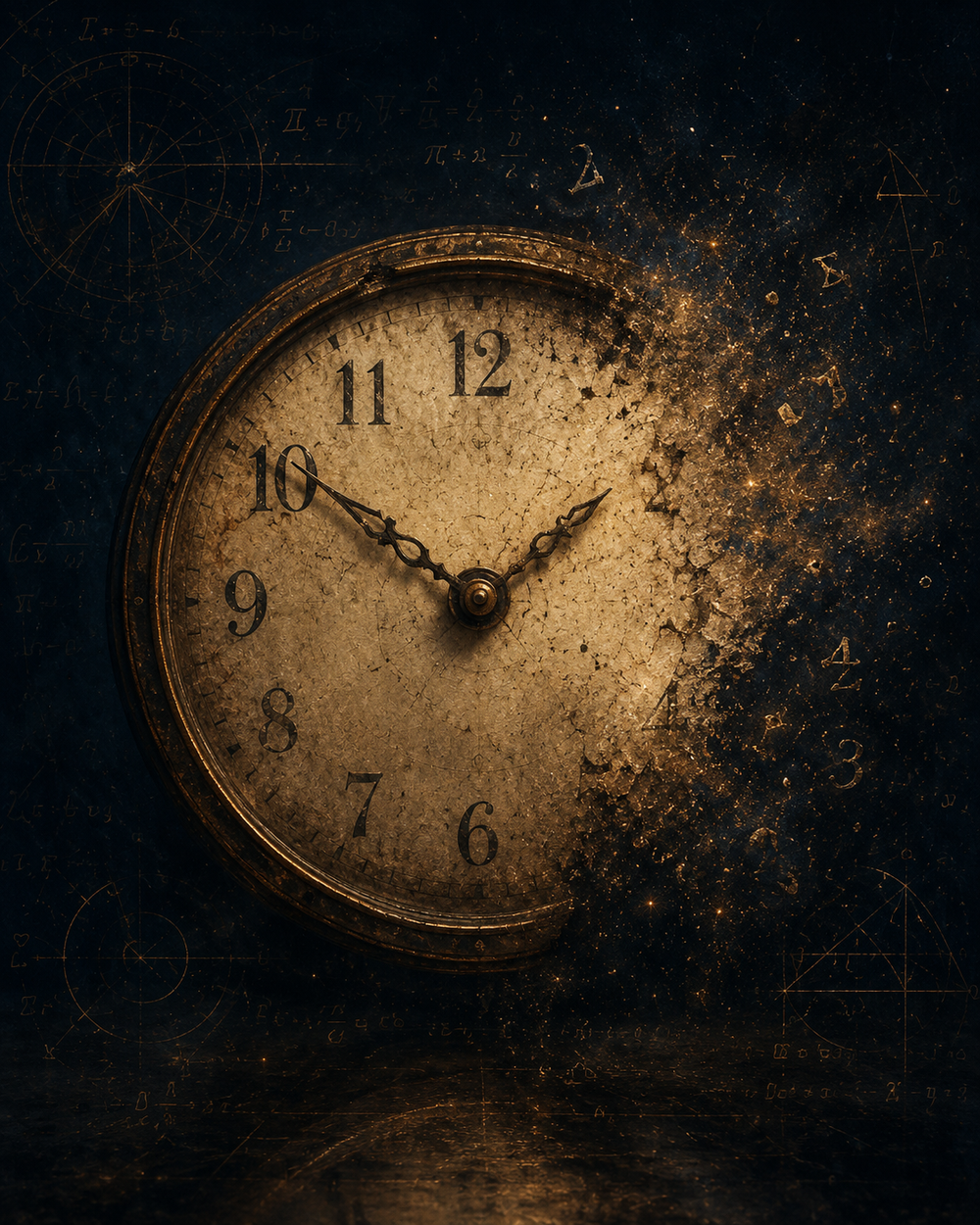
Sixty seconds in a minute, sixty minutes in an hour, 360 degrees in a circle, and map coordinates in degrees and minutes. Your phone's clock and GPS still use the system the scribes of Mesopotamia relied on.
The how
Why sixty?
Sixty can be shared out evenly in twelve different ways. Ten can be shared in only four. If you are dividing grain, land or silver between people, sixty means fewer awkward leftovers.
That is why the people of Mesopotamia counted in sixties, and why we still divide hours and circles that way.
Maths confidence
Different people notice different things
Maya knows the answer but struggles to say it. Fletcher spots the practical route. Aya trusts logic. Fella trusts his nose. In Mathatar, nobody is simply "good" or "bad" at maths. They solve problems together, each in their own way.
That is the message for readers who have decided maths is not for them: maths is not one skill, and it is not a test of speed. It is curiosity, pattern-spotting and the courage to keep thinking when something does not make sense.

Maths confidence
Approaching hard problems with curiosity rather than fear.

History and culture
Seeing maths as a human story, shared across civilisations.

Logical thinking
Following clues, testing ideas, explaining why.
Problem solving
Working as a team, where every strength counts.